


What to see in the Teide National Park: places and experiences not to be missed
In the centre of the island of Tenerife, the Teide volcano rises up like a lighthouse, with its imposing height of 3,718 metres. To the Guanches, it was known as Echeyde, a term that we might translate as ‘hell’, due to the fire within. And for good reason: this was the domain of Guayota, a wicked being, and a very common figure in the local mythology.

What the primitive inhabitants of this, the largest of the Canary Islands, could never have imagined is that this hell would become the Teide National Park, a wonder of nature that would be visited by millions of people every year. Nowadays, there are so many attractions to see on Mount Teide, both for tourists looking for the best excursions to the highest peak, and for the locals, who admire and venerate the volcano.
INDEX
1. Map of the best places to see on Mount Teide
The map below shows the places to see in the Teide National Park. Most of these can be reached via the TF-21, the road that crosses Las Cañadas del Teide, although there are other attractions that require a short walk if you want to enjoy the full splendour of this volcanic landscape.
2. The Teide National Park
The Teide National Park is the Canary Islands’ largest National Park, an excursion that no visitor to Tenerife should miss. In this natural park, you will find unique landscapes around the impressive silhouette formed by the volcano, which towers to an altitude of 3,718 metres.
Anyone asking about what to see on Mount Teide, must also ask what there is to see near Mount Teide, as this is an extraordinary geological treasure featuring volcanoes, craters, chimneys and lava streams, making for a remarkable panorama of colours and shapes.
Las Cañadas del Teide can surprise visitors with their diversity, and impress them with the rocks ravaged by erosion, and by the vast dimensions of this chaotic mineral landscape.
The dominant structure is Mount Teide, from which the National Park takes its name, an imposing volcanic edifice that can bee seen from much of the island, and especially from the whole of the northern coast, which it watches over with its thousand faces. The view can be very different, depending on the season and the time of day. At the feet of the volcano, there lies a stretch of volcanic rocks so recent that they do not yet show the effects of erosion; they present a vast assortment of volcanic shapes and materials within the huge amphitheatre framed by the wall of Las Cañadas. This imposing wall stretches for 25 kilometres, and reaches heights of up to 600 metres at its highest points in the area known as Guajara.
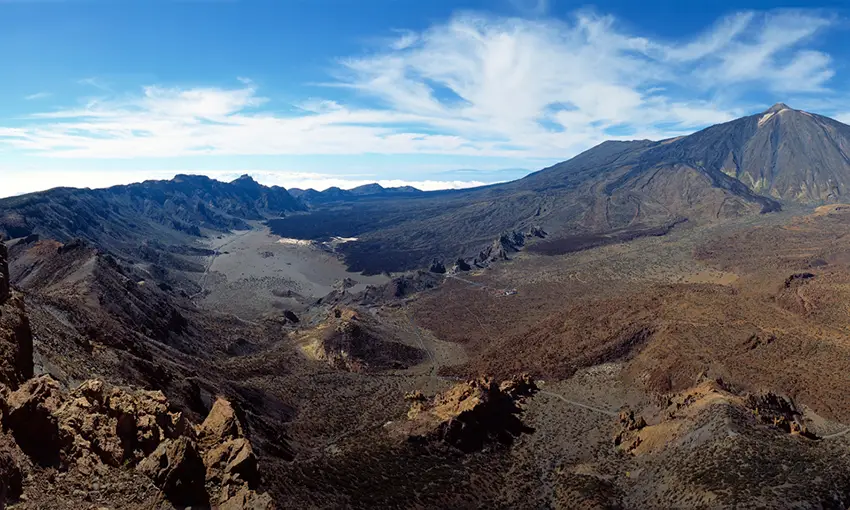
This geological park, declared a National Park in 1954, offers many services and benefits for visitors: from convenient access by road, visitors’ centres and restaurant facilities, to spectacular viewing points, an extensive network of paths, and even two establishments providing accommodation—the Parador Nacional de Las Cañadas del Teide and the Altavista Mountain Refuge, which stands at an altitude of 3,270 metres.
The Teide National Park was declared a World Heritage site by UNESCO in 2007.

3. What to see on Mount Teide
As you might expect, this National Park offers many and very varied attractions. For this reason, it’s a good idea to know what you want to see on your visit to Mount Teide, whether you visit independently or on an excursion, although on an excursion your only task will be to go with the flow and enjoy the experience.
Roques de García
— 4.5 km from the Teide Cable Car.
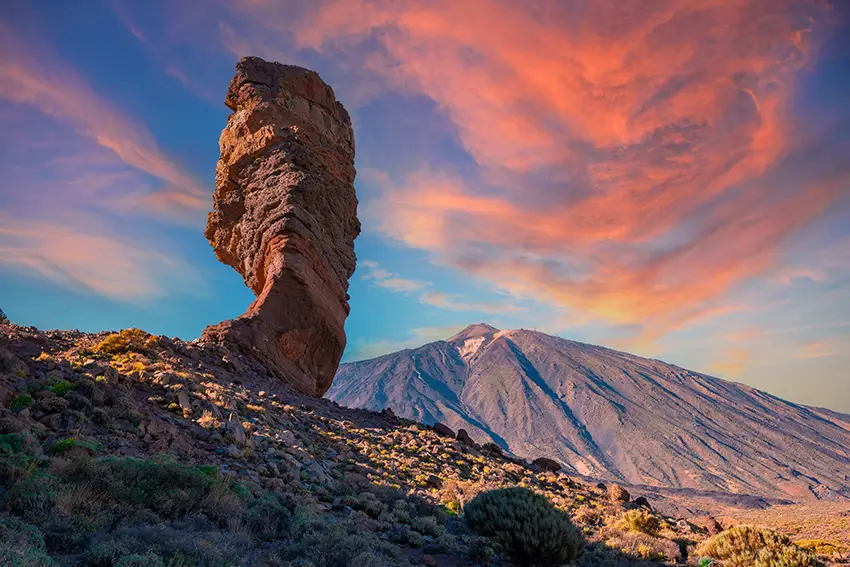
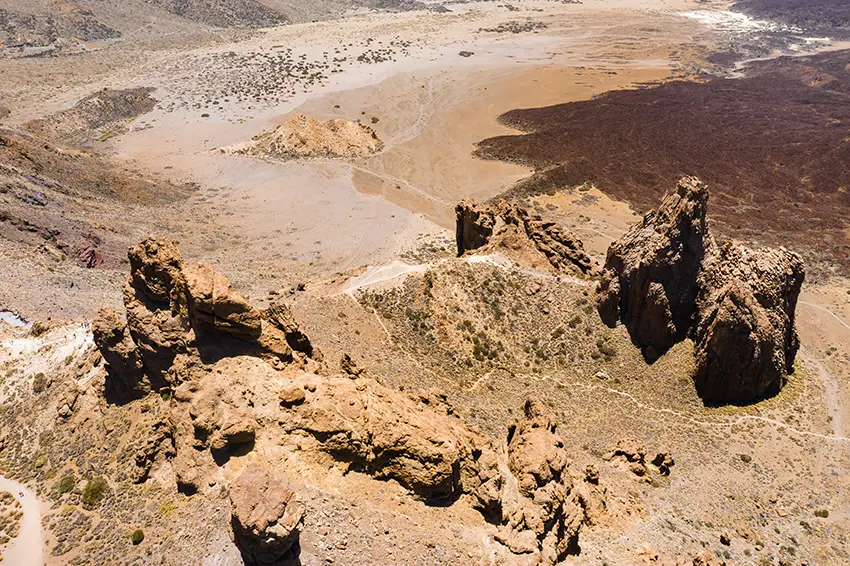
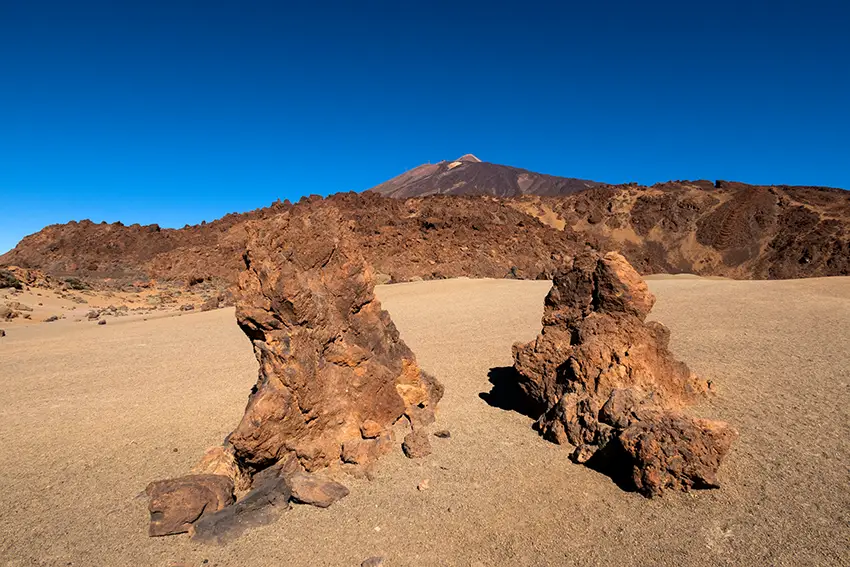
Without doubt, one of the Park’s most famous and photographed rock formations. These rocks are situated opposite the Parador del Turismo, and are very popular with the public thanks to their iconic beauty, and for the view they afford of the volcano.
These rocks rise up from the Llano de Ucanca plain, and there are a couple of paths you can follow to see their glory from all angles. Among the outstanding formations are La Catetral and La Cascada, but the most famous of all is the Roque Cinchado, which gained its fame when it appeared on the 1,000 peseta note that also featured Benito Pérez Galdós.
Arenas Negras
— 11.1 km from the Teide Cable Car.
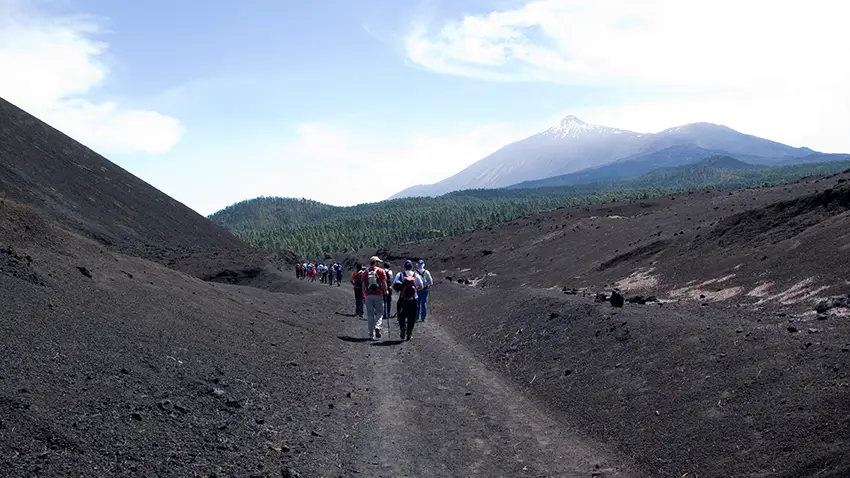
Arenas Negras [Black Sands] is a path that starts at the El Portillo Visitors’ Centre, and climbs the broom-clad Montaña del Cerrillar, reaching an altitude that allows visitors to enjoy a beautiful view of the Park and of the Llano de Maja. On very clear days, it is possible to see the silhouette of La Palma in the distance. This is definitely a good choice for visitors wondering what to see near Mount Teide. In fact, from there it is more than likely that you will be able to see the sea of clouds that forms in the north of the island.
El Portillo Visitors’ Centre
— 11.1 km from the Teide Cable Car.
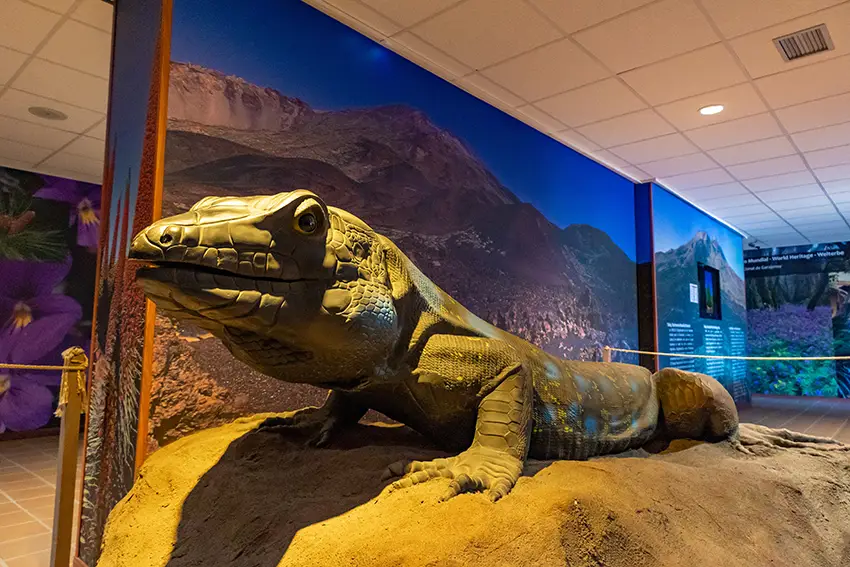
If you intend using the Arenas Negras path, we strongly recommend that you access the visitors’ centre and immerse yourself in the history of the Teide National Park since the formation of the Canary Islands.
In addition, the centre has an exhibition room, a passage that replicates a volcanic tunnel, and a large-scale model of Tenerife.
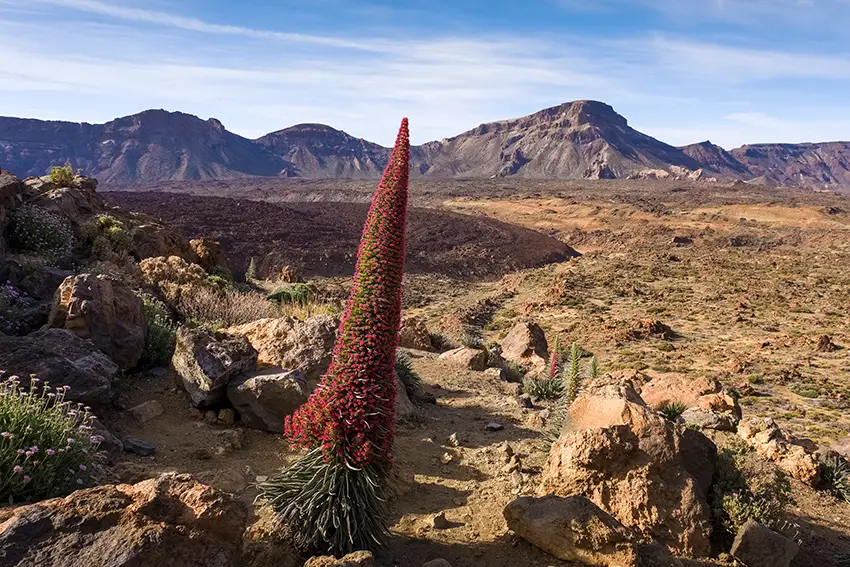
One important feature of the El Portillo Visitors’ Centre is that it is perfectly integrated into the volcanic landscape. The Centre also has a Botanical Garden, where you can see over 75% of the Park’s plant species, including its famous tajinastes or ‘tower-of-jewels’ (Echium wildpretii) plants.
Teide astronomical observatory
— 18.3 km from the Teide Cable Car.
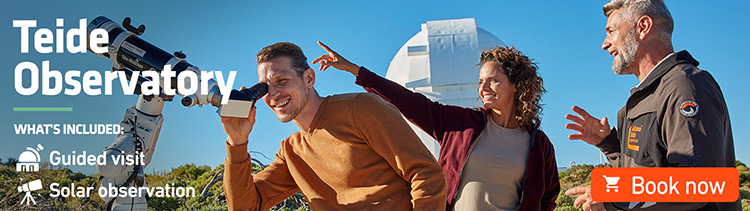
Astronomy enthusiasts will have the time of their lives in Tenerife, as the Teide National Park is home to the Teide Observatory. This has advanced telescopes which, according to the Canary Islands Institute of Astrophysics, have enabled us to “track the most significant comets of recent years (including the collision between the P/Shoemaker-Levy comet and Jupiter), and to obtain a large-scale map of the centre of the Milky Way”.
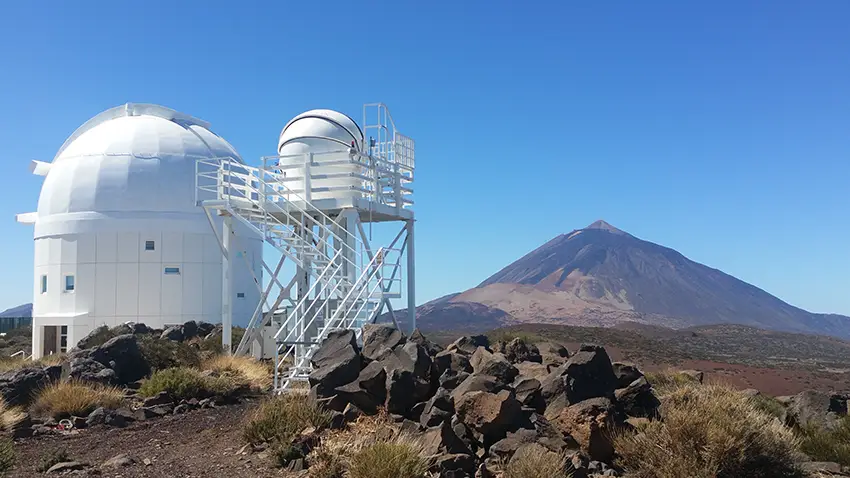
That is why this is the world’s biggest solar observatory, located at one of the best sites on Earth for observing the universe.
Fortunately, this is not somewhere that is closed to the public, as there are excursions and tours to the Teide Observatory, where visitors can immerse themselves in all the astronomical wisdom that lies within.

Mount Teide viewing points
As might be expected when one considers the majesty of the volcano, when compiling a list of places to see near Mount Teide, it is essential to mention the main miradores [viewing points] to be found at different points in the National Park.
Mirador Zapatilla de la Reina
— 8.4 km from the Teide Cable Car.
As a result of erosion over thousands of years, a formation has evolved in the shape of a heeled shoe (at least according to popular imagination). It is located in the south of the National Park, and offers a somewhat unusual perspective of the volcanic cone.
Mirador de Boca Tauce
— 10.8 km from the Teide Cable Car.

A little further away, this viewpoint stands at the junction of two roads (leading to Vilaflor and Chío, respectively). From here, it is possible to see the lava streams emitted by the most recent eruption of the Pico Viejo volcano in 1798.
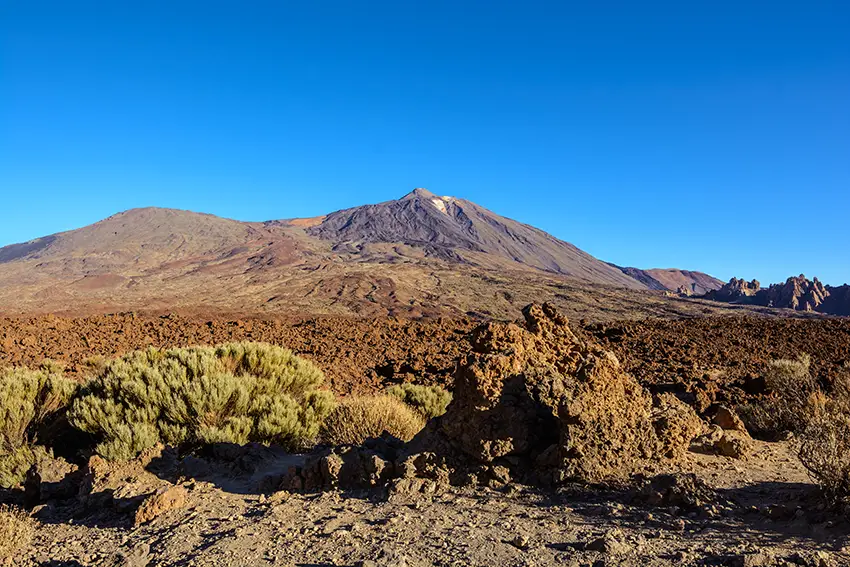
Mirador de las Narices del Teide
— 14.1 km from the Teide Cable Car.
This viewing point in the south of the island is the furthest from the cable car, but it does afford views of Pico Viejo, Tenerife’s second-highest volcano with an altitude of 3,100 metres.
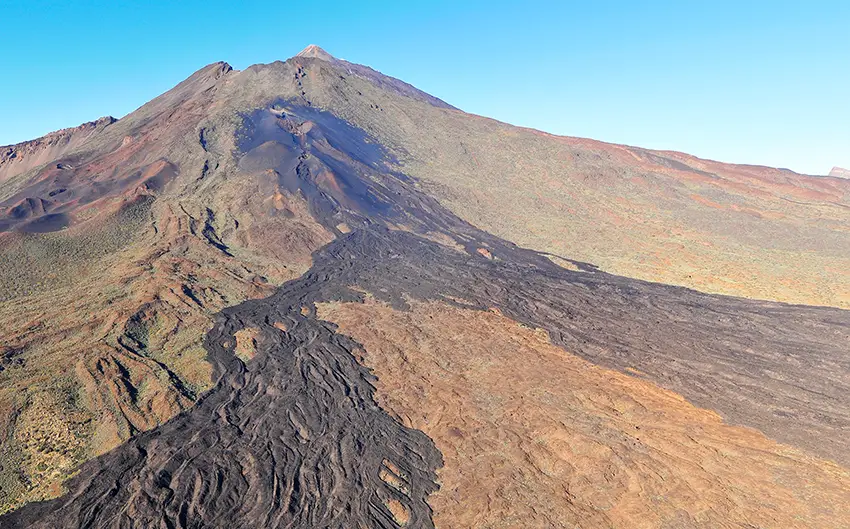
Mirador del Pico Viejo
— located on the slopes of the Teide volcano
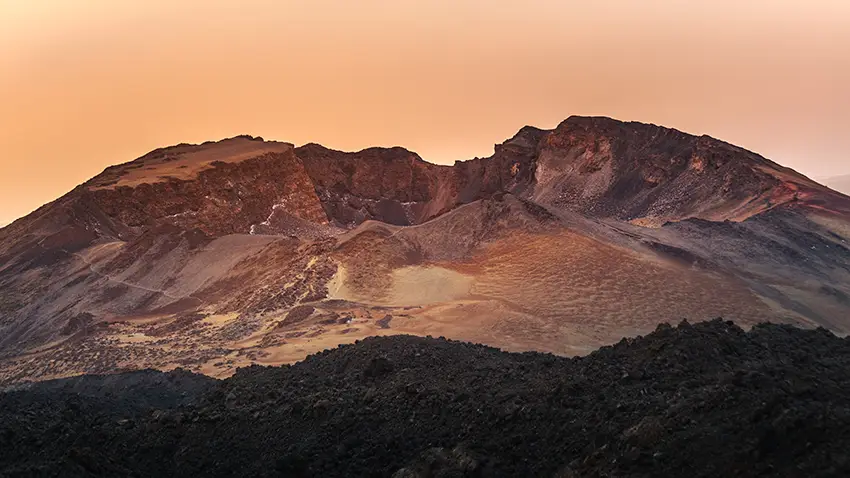
Another equally (maybe even more) attractive alternative way of viewing the volcano is to ascend in the cable car, and go on to visit the Pico Viejo Viewpoint with a guide who will explain how the surrounding landscape was formed.
If you prefer to travel to the cable car on an organised excursion with departures from Tenerife’s main tourist resorts, and would rather explore the trail to the Pico Viejo Viewing Point with a digital audioguide, we can strongly recommend the Teide Tour excursion.

Mirador del Llano de Ucanca
— 6.4 km from the Teide Cable Car.
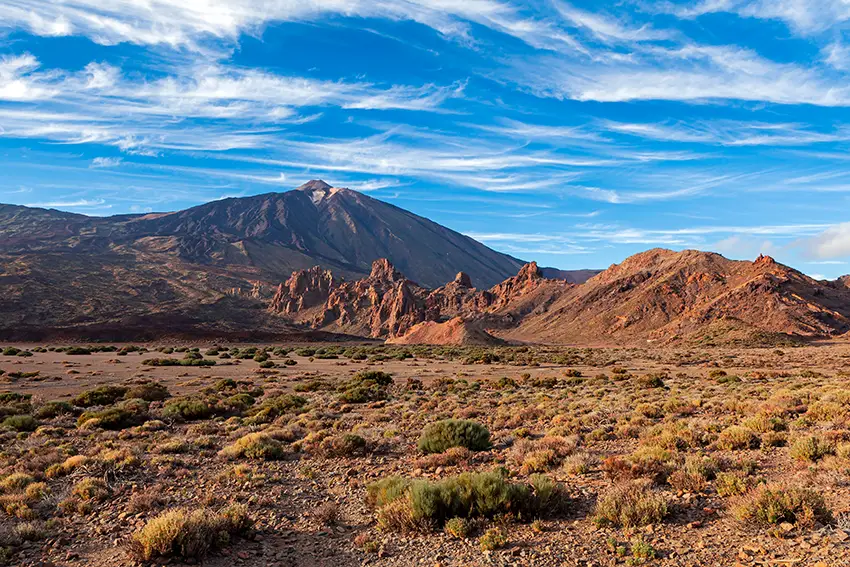
This is one of the main plateaux to be found within the Teide National Park, and from its viewing point you can see the two highest volcanoes and the Roques de García. When it snows, this area takes on a special beauty thanks to the contrast between the white snow and the blue of the sky.
Mirador de los Roques de García
— 4.5 km from the Teide Cable Car.
There is little more we can add to what has already been said about these rocky formations that rise up at one end of the plain known as the Llano de Ucanca. This is a stop-off you won’t want to miss, not least for the chance of a photo with the volcano in the background silhouetted against the sky. Another viewpoint, the Mirador de la Ruleta, offers a rather different panorama of the plain and La Catedral, which you may want to get a closer look at in order to appreciate its unusual structure.
Mirador del Tabonal Negro
— 2.1 km from the Teide Cable Car.
From here, you can obtain a good view of the Siete Cañadas; it is also an ideal spot to see the tajinastes in flower in the spring.
The name Tabonal Negro derives from a sharp-edged stone known as a tabona, which is the same colour and was used by the Guanches to make cutting tools.
Mirador Minas de San José
— 4.9 km from the Teide Cable Car.
This viewing point owes its name to former mineral mining operations in the area. The view from this point enables one to fully appreciate the arid nature of the volcanic landscape. Indeed, it bears a strong resemblance to the surface of Mars.
Cable Car Visitors’ Centre
Over time, facilities at Teide Cable Car base station have evolved to cater to visitors who are interested in learning more about the many unique aspects of Teide National Park. It has added new, fascinating services and has now become a proper Visitors’ Centre at the foot of the volcano. Today, the Cable Car Visitors’ Centre is an essential place to visit on any day of the year.
The existing services, a souvenir shop with interesting, handcrafted goods from the Canary Islands, and a restaurant with wonderful panoramic views of the National Park that serves local produce with the distinct flavour of the island, are now joined by the “Science and Legend” exhibition by Teide Legend. The exhibition is based around the legend of Guayota, who was believed to inhabit Echeyde (Teide), and recounts the story of Tenerife’s biggest volcanic eruption, which occurred over a thousand years ago, from the perspectives of the Guanche legend and science.

4. What to do in the Teide National Park
In view of the large number of attractions to be found in the National Park, it can be more difficult to decide what to do on Mount Teide as the possibilities range from using the cable car, through visiting the Teide Observatory to going hiking or to enjoying the magic of the starlit sky at nightfall.
Travel up Mount Teide by cable car
There is no doubt that the star activity on a visit to the Teide National Park is the cable car ride, which ascends to an altitude of 3,555 metres in the area known as La Rambleta, the starting point of 3 trails around the summit.
From La Rambleta you can access, without needing a permit, the La Fortaleza trail (which offers views of the north of the island and the fabulous sea of clouds), or the trail that leads to the Pico Viejo Viewpoint, with glorious views of the island’s southern slopes, with some of the neighbouring islands visible on the horizon—a guided tour can be booked for this route.
Those who prefer not to go walking can stay to admire the magnificent views of Las Cañadas from the Mirador de La Rambleta.
At present, there is no free access to the Telesforo Bravo path leading to the summit: you need to obtain a free permit in advance of your visit from the Teide National Park to climb up and circle the mouth of the volcano—you will find more information in this complete guide on how to reach the peak of Mount Teide.
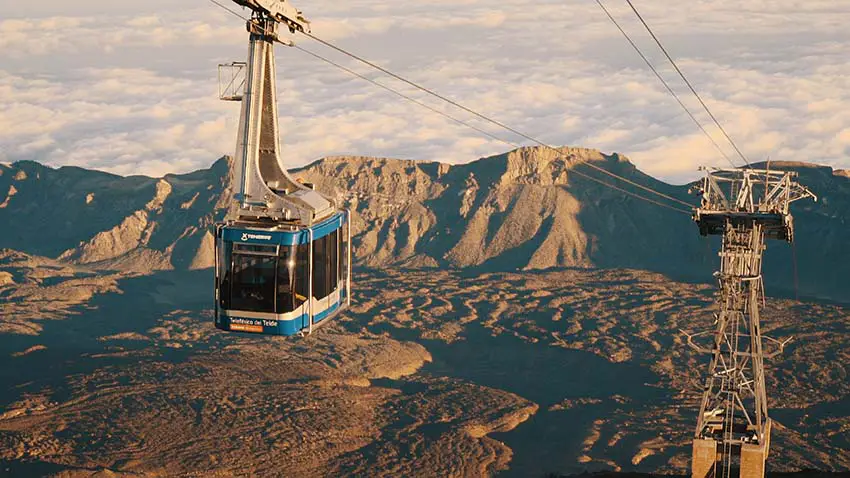
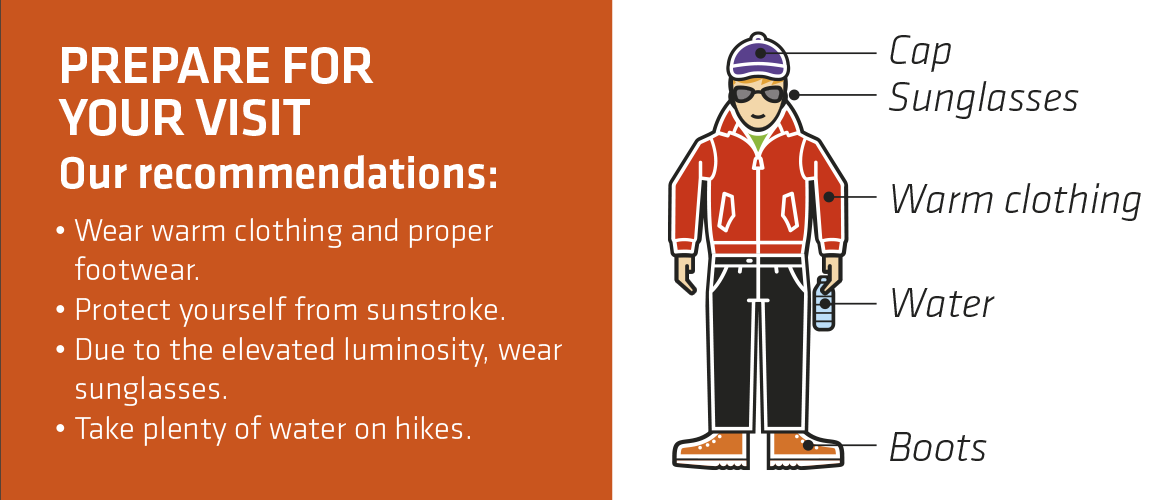
One thing you need to be mindful of on your visit to the National Park is your clothing, which must be suitable for a high-altitude environment. Much depends on the time of year, but at 3,555 metres it’s probably going to be much colder than normal, so it’s a good idea to make sure you are well informed and prepared so that you have an enjoyable experience.
See the sunset from Mount Teide
If there is one magical moment in the Park, it is at sunset. Most of the visitors have left, the light is fading, and silence reigns.
Wherever you are in the Park, you feel the special energy, but nothing matches the experience of watching the sun set from high up on the volcano.
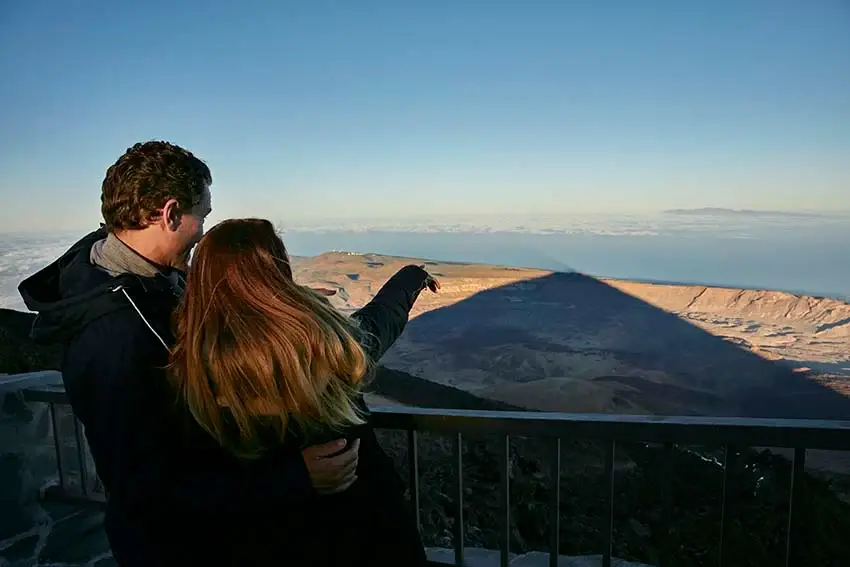
And there’s the option of enjoying the sunset on Mount Teide by travelling on the cable car outside its normal operating hours. Once you are up there, you can enjoy seeing the shadow of Mount Teide projected on to the sea, and watching the sun set from the trail to the Pico Viejo Viewpoint, with a view of some of the neighbouring islands on the horizon.
For those who would like to stay on Mount Teide for a little longer to observe the stars from this most privileged location, the “Sunset and Stars on Teide” excursion combines a ticket for the cable car to see the sunset with a subsequent stargazing session with telescopes, under the guidance of professionals.

See the stars on Mount Teide
And if watching the shadow of Mount Teide lengthen until it “touches” the island of Gran Canaria sounds like an amazing experience, seeing night fall and the skies fill with stars in a place where it is possible to see 83 of the 88 officially recognised constellations, is a unique experience that you really won’t want to miss.
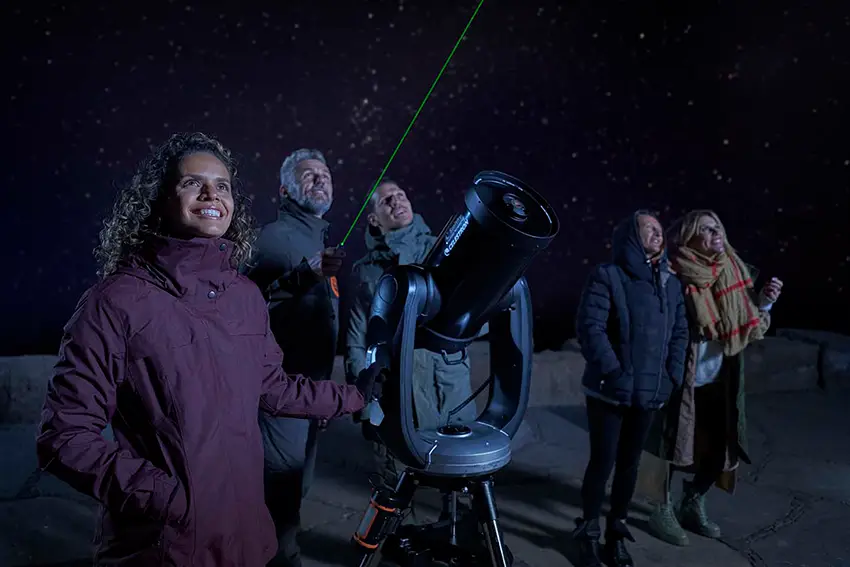
The location nearby of the Teide Astronomical Observatory demonstrates that this National Park is one of very few places on Earth where you can fully appreciate the beauty of the skies.

And it goes without saying that observing the stars from the foot of a volcano and in the midst of awe-inspiring silence, proves an unforgettable experience.
Untold numbers of people with an interest in astronomy come to Tenerife every year, drawn by this very aspect of the island. In order to offer them a good experience that reflects their particular interest, a range of different Tenerife stargazing excursions is provided, all designed to cater for these “astrotourists”.

Hiking on Mount Teide
One activity that visitors can enjoy on Mount Teide is hiking, as it is possible to hike over the entire area by following the 41 itineraries currently offered by the National Park.

Among the most interesting hiking trails in the National Park we can recommend the following:
From the cable car upper station:
- The trail to the La Fortaleza Viewpoint
- The trail to the Pico Viejo Viewpoint
- The Telesforo Bravo trail to the summit of Mount Teide (access permit required)
From other locations in the National Park:
- The Arenas Negras Trail
- The Los Roques de García trail
- The Siete Cañadas trail
- The La Degollada de Guajara trail
- The Montaña Blanca - La Rambleta trail

Discovering the flora and fauna of Mount Teide
Without a doubt, living conditions are harsh in such a high-altitude landscape. We can find lush vegetation at any access point to Las Cañadas, and especially at those in the north (La Esperanza and La Orotava). However, once past these wooded areas, we reach a point above 2,000 metres where the flora and fauna struggle to adapt to the terrain.
At the El Portillo Visitors’ Centre, we can learn a great deal about Mount Teide’s flora, as the centre has a unique Botanical Garden.
However, a good challenge for visitors to Mount Teide is to find the two types of endemic violet that grow here, the Teide violet and the Guajara violet.
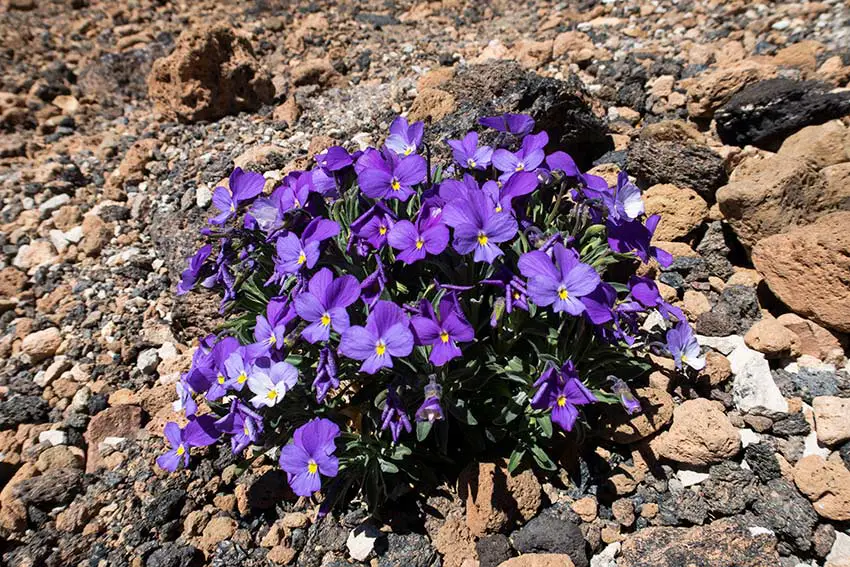
Where fauna is concerned, highlights are the tarentola or wall gecko, Gallot’s lizard or the Tenerife lizard, and the Canary long-eared bat, as well as birds such as the kestrel and the Teide finch among others.
A sustainable visit to Mount Teide
As we have shown, there is a great deal to see in the Teide National Park, a unique place in the world—and we want it to remain so for many years to come.
For this reason, we need to take care of it, support sustainability and, as far as possible, travel to see it in shared transport, something which is possible thanks to these Tenerife Teide excursions.
In other words, we need to become “Teidelovers”, and follow a few basic rules that any nature lover must respect.
5. See more information on the Teide National Park
The Teide National Park is an unmissable visit on any trip to Tenerife, whether you visit during the island’s mild winter or during the summer months. Don’t forget to read the most comprehensive guide to visiting the summit of Mount Teide, from finding the different viewing points that offer spectacular, panoramic views, to watching the sunset, to discovering the plant life growing among the volcanic rocks.
It may well be that Guayota is hiding in the hell concealed deep inside the Park, but the outside is a natural treasure to be enjoyed by every human being.




